• Stats Behind Happy, Productive Workplaces
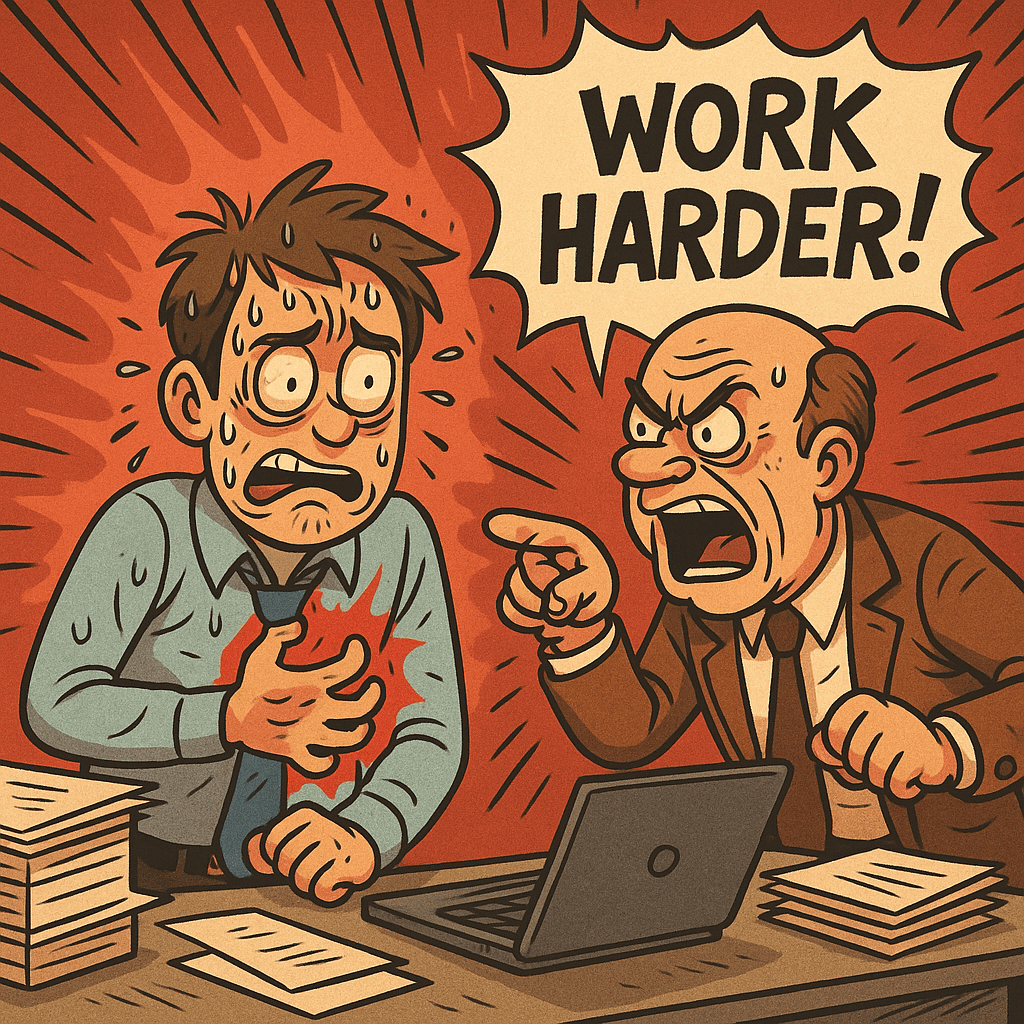
    We often hear that working hard and knowing your stuff are the keys to success. But mounting evidence suggests there’s a smarter, healthier path: finding joy and balance at work. When employees feel fulfilled and their roles align with their strengths, they don’t just feel better—they perform better.

    In this post, we’ll break down workplace stress statistics, the link between job satisfaction and productivity, and what a truly healthy work culture looks like.

    1. 😊 Happy Workers Are More Productive (and Less Stressed)

    Let’s start with some eye-opening stats:

    • A study from Oxford University found that happy employees are 13% more productive than their unhappy peers.

    • The University of Warwick showed similar findings: happier workers had 12% higher performance.

    • Engaged workplaces saw up to 202% better results, and happy workers took 90% fewer sick days than stressed ones.

    👉 Key takeaway: A fun, low-stress environment doesn’t hurt productivity—it supercharges it

    2. Engagement = Less Turnover and Better Work-Life Balance

    Workplace stress and burnout are two of the top reasons employees quit. But when employees enjoy their work and feel valued:

    • Companies see 31% more productivity and 37% higher sales.

    Gallup found engaged employees are 87% less likely to leave.

    • According to a 2022 survey, 62% of U.S. workers reported high job satisfaction, and those workers were also 87% more likely to stay.

    Harvard Business Review confirms: fun and meaning at work increase engagement, creativity, and loyalty.

    👉 Retention starts with reducing stress and building strong, flexible team

    3. Real Fun Isn’t Ping Pong—It’s Purpose

    There’s a difference between superficial fun (like games) and deep, meaningful work:

    Inc. Magazine explains that “deep fun” happens through problem-solving and creative challenges. That’s where true engagement lives.

    • A Taiwanese study of 500+ employees found that when managers supported workplace fun, employees were more creative and collaborative, especially when there was trust

    👉 When employees love what they do, they give more, stay longer, and feel less drained.

    4. Autonomy + Flexibility = Burnout Prevention

    Stress at work often comes from rigid schedules and micromanagement. Research shows:

    Flexible work schedules boost productivity by 29% and improve focus by 53%.

    • A U.K. study found 74% of hybrid workers felt more productive, and 75% reported less burnout.

    Remote workers report 24% higher monthly happiness and better work-life balance overall.

    👉 Empowering employees with flexibility helps prevent burnout and reduces workplace anxiety.

    5. Job Satisfaction Reduces Turnover and Workplace Stress

    Job satisfaction leads to better team stability:

    • A 2022 survey showed 62.3% satisfaction among U.S. workers.

    • Satisfied employees are 87% more likely to stay, reducing expensive turnover.

    • Disengaged teams cost companies billions. Gallup estimates this loss equals 9% of global GDP.

    Companies with strong morale can outperform competitors by up to 202%.

    👉 Less stress = more stability. Retention is a sign of emotional safety.

    6. Real-World Impacts of a Healthy Work Culture

    💡 Creativity & Performance

    • A Time article found workers who engage in creative hobbies outside of work are 30% more productive and resilient in the office.

    👥 Recognition Reduces Stress

    • Simple things like saying “thank you” can increase productivity by 86–90%.

    Gallup also found that trust in leadership boosts job satisfaction by 63% and engagement by 38%

    👉 High-stress workplaces often suffer from poor communication. Respect and recognition are simple cures.

    7. Case Study: Listening = Loyalty

    Think back to the story of the cashier who became a baker:

    • She wasn’t just another worker—she was passionate and skilled.

    • When her talents went unrecognized, she left. But in the right environment, she thrived.

    • That shift from undervalued to fulfilled transformed her career and loyalty.

    👉 Great managers reduce workplace stress by listening, not just delegating.

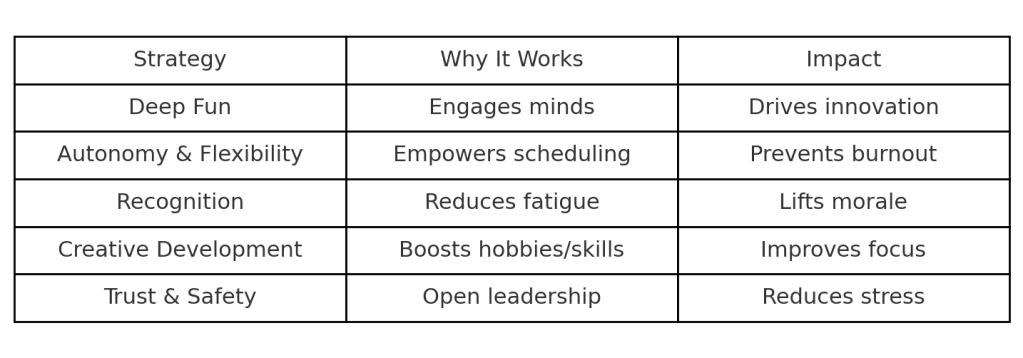
    🔧 What You Can Do to Build a Less Stressful, More Productive Workplace

    Here’s your action playbook to improve employee well-being, reduce stress, and drive results:
    Final Word: Happy, Balanced Teams Win—Every Time

    ✅ Happy workers are 12–13% more productive

    ✅ They take fewer sick days, and stay longer

    ✅ They’re less stressed, more loyal, and more creative

    Burnout isn’t a badge of honor—it’s a warning sign.

    If your team is overwhelmed, disengaged, or anxious, it’s time to look at the culture—not just the workload.

    You don’t need gimmicks to create a fun workplace. You need trust, purpose, communication, and flexibility.That’s what builds the kind of team that doesn’t just survive—but thrives.

    📚 References & Sources

    • Oswald, Andrew J., Eugenio Proto, and Daniel Sgroi. “Happiness and Productivity.” University of Warwick, 2014, https://warwick.ac.uk/newsandevents/pressreleases/new_study_shows/.

    • Bryson, Alex, and George MacKerron. “Are You Happy While You Work?” Saïd Business School, University of Oxford, 2019, https://www.sbs.ox.ac.uk/news/happy-workers-are-13-more-productive.

    • Gallup. “State of the Global Workplace: 2023 Report.” Gallup, 2023, https://www.gallup.com/workplace/349484/state-of-the-global-workplace.aspx.

    • Harvard Business Review. “Creating a Happier Workplace Is Possible — and Worth It.” Harvard Business Review, 2022, https://hbr.org/2022/10/creating-a-happier-workplace.

    • Gallo, Amy. “Employee Burnout: The Biggest Myth.” Harvard Business Review, 2021, https://hbr.org/2021/02/burnout-is-about-your-workplace-not-your-people.

    • Inc. Staff. “The Surprising Science of Having ‘Fun’ at Work.” Inc., 2021, https://www.inc.com/melanie-curtin/the-surprising-science-of-having-fun-at-work.html.

    • Tews, Michael J., et al. “Fun and Friendships in the Workplace: Do They Matter?” Journal of Vocational Behavior, vol. 76, no. 3, 2010, pp. 291–302. https://doi.org/10.1016/j.jvb.2009.11.002.

    • Time Staff. “Creative Hobbies Can Boost Job Performance by 30%.” Time Magazine, https://time.com/5369581/creativity-work-performance/.

    • HR Cloud. “The Power of Employee Recognition.” https://www.hrcloud.com/blog/employee-recognition-statistics.
  • It’s That They Didn’t Know How to Use You

    In today’s working world, success isn’t always about how hard you work or how much you know. More often, it comes down to whether your strengths are recognized, whether someone sees the value you bring—and whether you’re placed in a position where you can thrive.

    We often say, “Don’t blame the student, blame the teacher.”

    But that same concept applies to the workplace: Don’t always blame the employee—look at the leadership.

    Playing to Strengths: The Secret Ingredient of Great Leadership

    One of the most overlooked traits in leadership today is the ability to observe, listen, and place people where they shine.

    Too many managers stick to policy.Too many business owners stick to procedure.They forget that they’re working with people—not cogs in a machine.

    A great leader isn’t someone who blindly follows the company handbook.A great leader sees the potential in people—even when it doesn’t match their job title.

    My Wake-Up Call: A Missed Opportunity

    Let me share a real story from my own journey.

    But I brushed it off.

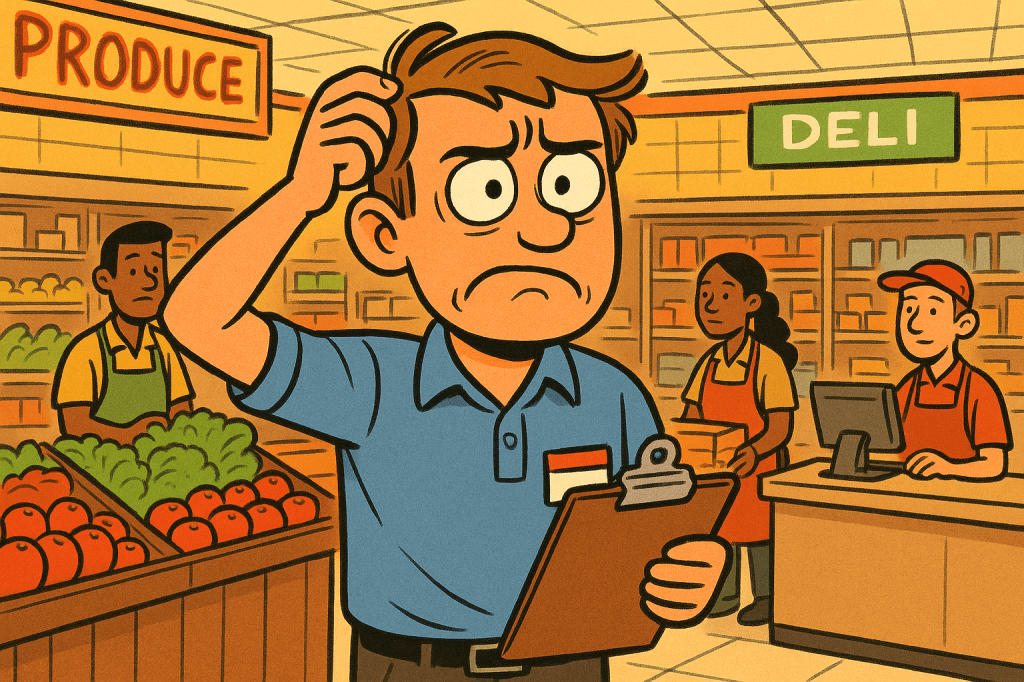
    I once hired a woman to work as a cashier. She was consistent, polite, and did her job well. But she often shared stories about how, back in her home country, she would bake bread and sell gelatins on the street. She told me how successful she had been doing it—how much pride she took in it

    Not out of malice, but ignorance.

    I had hired her for the register, and in my mind, that’s where she was supposed to be. I didn’t see beyond the title. I didn’t ask more questions. I didn’t listen.

    Eventually, she left—frustrated by the empty promises I had made about “maybe moving her to another department one day.” I later found out she had joined the bakery team at Walmart, working longer shifts, staying late, even taking the bus home at 11 PM. And you know what?

    She didn’t mind.

    She was finally doing what she loved.Today, she’s one of their top employees in that department.

    The Lesson: Don’t Waste Potential

    That moment taught me something I’ll never forget:

    Sometimes it’s not the employee’s fault. Sometimes it’s not even the manager’s fault. Sometimes… people just don’t know how to use you.

    Not everyone fits neatly into a job description. Some people have talents that go unnoticed because their managers never ask the right questions—or never bother to listen.

    Imagine how different that story could’ve ended if I had:

    • Taken 10 minutes to ask about her baking

    • Given her a chance to help in our bakery department

    • Let her show me what she could do instead of assuming I already knew.

    I lost a great employee—not because of performance, but because I failed to see her potential.

    The Bigger Picture: What Real Leadership Looks Like

    Being a leader is more than enforcing policies.

    It’s about building relationships, creating trust, and putting people where they can succeed.

    Some of your best team members might be doing the wrong job—not because they’re lazy or incapable—but because no one has seen what they’re truly good at.

    Ask yourself:

    • Who on my team has untapped skills?

    • Am I listening to what my employees are really saying?

    • Am I too focused on roles and not enough on people?

    When you shift your mindset from “just follow the system” to “let me understand my team,” everything changes.

    Morale improves.

    Performance skyrockets.

    And people actually want to come to work.

    Final Word: People Want to Be Valued, Not Just Paid

    It’s easy to overlook people’s gifts when you’re focused on deadlines, reports, and policies. But the greatest return on investment comes not from squeezing every hour out of someone—but from placing them where they can thrive.

    To all the leaders reading this:

    Start listening more.

    Start observing more.

    And don’t be afraid to let someone grow beyond the role you hired them for.

    Because sometimes, it’s not them.Sometimes, it’s just that no one ever figured out how to use them the right way.

  • Hustle Culture Can Literally Kill You 💔

    We hear it everywhere: “Rise and grind,” “Never stop hustling,” “Sacrifice today for success tomorrow.” But what if this glorification of nonstop productivity is quietly draining your life force—and taking lives in the process?

    Stress isn’t merely unpleasant. It is biologically lethal. And even for those who look healthy and are in their physical prime, unrelenting grind can wreak havoc on your entire system.

    🧠 The Science: How Stress Hurts Your Heart

    Multiple studies confirm that chronic job-related stress significantly elevates the risk of heart disease and stroke:

    .A large meta-analysis linked job strain—high demand with low control—and long hours to moderately elevated risks of coronary heart disease and stroke 

    . Office workers facing high job strain and low reward had an 83% higher risk of atrial fibrillation, a condition that can trigger strokes 

    . The World Health Organization highlighted that working 55+ hours per week led to 745,000 deaths from ischemic heart disease and stroke in 2016—a figure that had surged 29% since the year 2000  .

    Other landmark findings:

    .Men reporting high job strain or effort-reward imbalance saw their heart disease risk increase by 49%, and double that when both factors combined—an impact comparable to obesity 

    . One study estimated that work stress alone increased chances of fatal heart attacks by about 23% 

    . Whitehall Studies from the ’60s–’80s revealed that lower-status and high-strain jobs had significantly higher rates of mortality from heart disease—even when accounting for risk factors like smoking and inactivity  .

    The scientific verdict is unanimous: Chronic workplace stress is a killer.

    Tragic Real-World Examples

    Karōshi – “Death by Overwork” in Japan & Korea

    In Japan, karōshi refers to sudden death from overwork, commonly due to cardiac arrest or stroke. Its documented victims include:

    A 29-year-old shipping clerk who suffered a stroke and died in 1969 after relentless long hours 

    . A graphic, heart-wrenching case: a 22-year-old nurse collapsed and died from a heart attack following five 34‑hour shifts in one month 

    . In Taiwan and Sweden, overwork deaths occur in various industries, with hundreds a year—despite supposedly protective labor laws  .

    Miwa Sado – A Modern Example

    In 2013, 31-year-old NHK journalist Miwa Sado collapsed and died from congestive heart failure after recording an overtime total of 159 hours in a single month  . This wasn’t an accident—it was a tragedy born of systemic overwork.

    Acute Stress & “Broken Heart” Syndrome

    Stress doesn’t have to build over years. Sudden psychological trauma can cause takotsubo cardiomyopathy, aka “broken heart syndrome.” More than 70–80% of cases follow a major stressor, whether grief, relationship breakdown, or job loss  .

    This can lead to temporary but severe heart weakness, chest pain, and in rare cases, death.

    Real People, Real Stories

    Beyond statistics and blurbs, these are human tragedies:

    .In Quebec, a long-term study of nearly 6,000 office workers revealed a 97% increased risk of atrial fibrillation—even among those with high salaries  .

    .On the global stage, WHO/ILO data estimates that 745,000 people died in 2016 alone due to working 55+ hours per week, with that number expected to climb 

    . The Whitehall Studies spotlight stress from low control and low reward as killer factors—even in sedentary mental work—pointing to the psychological burden of powerless positions .

    Why Hustle Culture Fails Us

    Hustle culture celebrates:

    . Endless work as a moral badge

    . Skipping rest and even basic self-care

    . Ignoring your body’s warnings until it’s too late.

    But the human body is not a machine. We cannot autopilot through extreme schedules permanently. Chronic stress raises blood pressure, triggers inflammation, disrupts sleep and hormone systems, and accelerates atherosclerosis and arrhythmias .

    Ignoring these signs isn’t dedication—it’s dangerous.

    The Power of Rest: What the Science Says

    Rest is not optional. It’s protective, restorative, necessary.

    1. Interrupt long work hours. WHO/ILO data warns that consistently pushing past 55+ hour weeks dramatically raises cardiovascular mortality  .

    2. Psychosocial balance matters. Reducing job strain and ensuring effort-reward equity has been shown to lower blood pressure and decrease heart disease risk 

    3 . Rest helps you restore. While acute stress reactions tend to fade, chronic allostatic load only decreases when we prioritize daily breaks, quality sleep, and leisure time

    4 . Shoot for balance. The WHO emphasizes combining psychological recovery strategies (mindfulness, hobbies) with physiological recovery (sleep hygiene and physical rest) to build resilience .

    A Balanced Day: Practical Breaks and Why They Matter

    ✅ Example Routine

    . Morning rest ritual: 10-minute meditation or deeply breathing before even checking your phone

    . Healthy work blocks: Apply the Pomodoro method—50 minutes on, 10 off. Stand up, stretch, drink water

    . Midday pause: A full lunch break away from screens; ideally stepping outside

    . Evening wind-down: Disconnect from work & hustle at least 2 hours before bed; allow for hobbies, social time, or reflection.**

    Longer Breaks That Matter

    . Weekly reset: a half-day off (Friday afternoon or Saturday morning) to disconnect mentally

    . Monthly mini-vacations: Long weekends mid-month

    . Quarterly downtime: Two to five days to reset, especially during intense work periods.

    Manager Wisdom: Why We Need to Block Off Rest

    As a manager, I’ve watched this firsthand:

    I used to refuse spontaneous days off. Now I approve them

    . I’ve seen burnt-out employees return half-alive—and watched them come back as joyful, engaged, efficient professionals

    . Stressed employees deliver mediocre results. Refreshed ones over-deliver.

    A well-rested team is not only healthier—they are more creative, loyal, and enthusiastic.

    What You Can Do Now

    1. Track your hours. If you’re regularly clocking 55+ hour weeks, it’s time to reassess

    2. Talk to your leader. Ask for predictable breaks, flexible schedules, or reduced weekend contact

    3. Low-cost interventions:

    . Micro-breaks at work—set reminders to stretch every hour

    . Scheduled rest time on your calendar—personal appointments count too

    . Offline blocks after work—no checking email or Slack

    4 . Check your body. See a doctor for stress markers: blood pressure, cholesterol, arrhythmia symptoms

    5 . Build recovery habits: exercise, sleep routines, hobbies, time with loved ones.

    Final Word: Your Health Is Not a Side Hustle

    You may be young, healthy, or even super fit. But high stress is a silent thief. It doesn’t care how you look—it cares about how hard your heart is working and how long you give it a break.

    If you don’t listen to your body now, the consequences may be irreversible. You’re not just risking burnout—you’re risking real, medical emergencies: arrhythmias, heart failure, stroke, or sudden cardiac death.

    This isn’t fear-mongering. It’s reality.

    Please share this post. Talk to your bosses. Look after your teammates. And most importantly, give yourself permission to rest.

    Because hustle is temporary—and your life shouldn’t be.

    Refrences

    https://www.who.int/news/item/17-05-2021-long-working-hours-increasing-deaths-from-heart-disease-and-stroke-who-ilo

    https://en.wikipedia.org/wiki/Effects_of_overtime?utm

    https://carterandcivitello.com/index.php/resources/2016-06-06-15-53-36/occupational-stress-heart-disease-and-heart-attacks?utm_source=chatgpt.com

    https://pmc.ncbi.nlm.nih.gov/articles/PMC4523692/

    https://en.wikipedia.org/wiki/Karoshi

    https://www.thetimes.com/uk/science/article/stressed-and-undervalued-office-staff-have-97-percent-higher-heart-risk-2mnq7082n

    https://en.wikipedia.org/wiki/Karoshi

    https://en.wikipedia.org/wiki/Effects_of_overtime?utm_source=chatgpt.com

    https://time.com/4972787/death-overwork-japan-heart-stress/

    https://time.com/6332877/stress-affects-heart-health/